
Best Monitors & Displays for Every Budget (2026)
Your monitor is the one piece of tech you stare at for 8+ hours a day. It deserves more thought than your GPU. Whether you're on a tight budget or ready to splurge on QD-OLED, here's what's actually worth buying.
Guide updated June 2026
This page contains affiliate links. If you buy through them, we earn a small commission from Amazon at no extra cost to you. It doesn't change what we recommend — but you deserve to know before you click.
Editor's Note
“I ran three monitors for two years and thought I was maximizing productivity. Then I tried the Samsung Odyssey G95C — one 49-inch ultrawide that takes three separate inputs — and sold all three monitors within the month. This upgrade is genuinely not reversible.”
— The TotalTechPicks Team
How we picked
Monitor specs are the most gamed numbers in tech — '1ms response time' on a panel that smears, 'HDR400' that isn't HDR. We leaned on the communities that measure instead of quote: r/Monitors and the review channels that test actual response times, overshoot, and backlight uniformity. Every pick here has measured performance that matches its marketing, which is rarer than it should be.
Every pick in this guide is re-verified against Amazon nightly, so you'll only ever see products you can actually buy today.
At a Glance — Full Comparison
ratings from Amazon · prices approximate| # | Product | Price | Rating | |
|---|---|---|---|---|
| 1 | 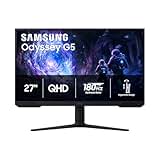 Samsung Odyssey G5 27" 165Hz Curved 💰 Best Value | $249.99 | ★ 4.6 (18,000) | View → |
| 2 |  ASUS TUF Gaming VG27AQ 27" QHD 165Hz 🏆 Best Overall | $229.99 | ★ 4.5 (11,000) | View → |
| 3 |  BenQ MOBIUZ EX2710Q 27" 165Hz IPS 🔥 Editor's Pick | $299.99 | ★ 4.5 (5,200) | View → |
| 4 |  Alienware AW3423DWF 34" QD-OLED ✨ Staff Fave | $799.99 | ★ 4.7 (7,100) | View → |
| 5 |  LG C3 55" OLED evo 4K TV 🤯 Overkill Mode | $1296.99 | ★ 4.8 (9,200) | View → |
| 6 | 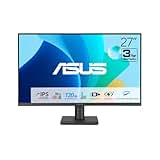 ASUS ProArt PA278CV 27" 4K IPS Monitor 🎯 Best for Work | $329.99 | ★ 4.6 (9,100) | View → |
| 7 |  Dell S2722QC 27" 4K USB-C Monitor 💰 Best Value | $279.99 | ★ 4.5 (7,800) | View → |
| 8 |  AOC 27G2 27" IPS 144Hz Gaming Monitor ⚡ Budget Beast | $179.99 | ★ 4.5 (13,000) | View → |
| 9 |  LG 49" 5K2K DQHD Curved Ultrawide 🤯 Overkill Mode | $1099.99 | ★ 4.5 (3,400) | View → |
| 10 |  Samsung M8 32" 4K Smart Monitor ✨ Staff Fave | $599.99 | ★ 4.4 (6,900) | View → |
| 11 |  ASUS ROG Strix 27 inch 🚀 Community Fave | $249.99 | ★ 4.4 (1,081) | View → |
Filter by Price
1000R curved 27" QHD 165Hz VA panel with 1ms response time. Stunning color depth and the curve actually matters at 27". Best budget gaming/work monitor.
✓ Pros
- ✓ 1000R immersive curve
- ✓ 165Hz smooth gameplay
- ✓ QHD sharpness
✗ Cons
- ✗ VA panel IPS glow alternative
- ✗ No USB-C input
IPS panel, 2560×1440, 165Hz, G-Sync Compatible, ELMB-Sync for motion clarity. The best all-around gaming monitor under $250. Flat IPS alternative to the Odyssey.
✓ Pros
- ✓ IPS panel (better colors than VA)
- ✓ G-Sync + FreeSync
- ✓ 165Hz refresh rate
✗ Cons
- ✗ Bezels are not ultra-thin
- ✗ No USB-C
HDRi with a built-in light sensor that auto-adjusts color tone — a BenQ exclusive. 2K IPS, 165Hz, 1ms. Exceptional color accuracy right out of the box.
✓ Pros
- ✓ HDRi auto color adjustment
- ✓ Crisp IPS 2K
- ✓ Built-in 2.1 speakers
✗ Cons
- ✗ No USB-C
- ✗ Speakers are decent, not great
Quantum Dot OLED. True blacks. Infinite contrast. 175Hz. 3440×1440. AMD FreeSync Premium Pro. This is the monitor that makes people who see it say 'I need that.'
✓ Pros
- ✓ True OLED infinite contrast
- ✓ 175Hz ultrawide
- ✓ Jaw-dropping colors
✗ Cons
- ✗ OLED burn-in risk with static content
- ✗ Premium price
LG C3 55" OLED evo 4K TV
The monitor/TV hybrid that gamers and cinephiles fight over. 120Hz @ 4K, G-Sync/FreeSync, 4 HDMI 2.1 ports, Dolby Vision. Absolute pinnacle of home display technology.
✓ Pros
- ✓ Perfect OLED blacks
- ✓ 4x HDMI 2.1 ports
- ✓ G-Sync & Dolby Vision
✗ Cons
- ✗ Potential burn-in with static UI
- ✗ Very large — measure first
100% sRGB, 100% Rec.709, factory-calibrated ΔE<2, USB-C 65W PD, pivot/swivel/height adjust. The monitor professional photographers and video editors put on their wishlists.
✓ Pros
- ✓ Factory ΔE<2 calibration
- ✓ USB-C 65W
- ✓ Pantone validated
✗ Cons
- ✗ Only 60Hz
- ✗ No HDR400+
4K IPS, 60Hz, 90W USB-C PD — a thin-bezel monitor that charges your laptop while you work. Dell's build quality and color accuracy without the premium price.
✓ Pros
- ✓ 90W USB-C PD charging
- ✓ 4K IPS quality
- ✓ Dell reliability
✗ Cons
- ✗ 60Hz max
- ✗ No G-Sync/FreeSync
IPS panel, 144Hz, 1ms MPRT, FreeSync Premium, AMD and G-Sync compatible. The best-value gaming monitor IPS under $200. Pros used to pay $400 for this a few years ago.
✓ Pros
- ✓ IPS + 144Hz under $200
- ✓ FreeSync + G-Sync compatible
- ✓ Great out-of-box color
✗ Cons
- ✗ No USB-C
- ✗ Stand wobbles slightly
Dual QHD in a single 49" 32:9 panel. Replace two monitors with one. USB-C 90W, Thunderbolt 4, built-in KVM switch. Productivity superpower for multi-monitor users.
✓ Pros
- ✓ Replaces dual 27" monitors
- ✓ Thunderbolt 4 + KVM
- ✓ USB-C 90W
✗ Cons
- ✗ Enormous — needs wide desk
- ✗ Very expensive
Samsung M8 32" 4K Smart Monitor
4K IPS, built-in Tizen OS for Netflix/YouTube, SlimFit Camera, USB-C 65W. Use it as a TV, a monitor, or a smart display — all without a PC. The living room tech person's dream.
✓ Pros
- ✓ Built-in Tizen streaming OS
- ✓ SlimFit Camera for video calls
- ✓ USB-C 65W
✗ Cons
- ✗ Only 60Hz
- ✗ Smart TV features need WiFi
ASUS ROG Strix 27 inch
Recommended for its fast refresh rate of up to 240Hz and low response time of 1ms.
✓ Pros
- ✓ Fast
- ✓ Up to 240Hz
- ✓ 1ms
✗ Cons
- ✗ Newer to our list — less long-term data
Buying Guide — What to Look For
Panel type changes your experience
IPS: best colors + viewing angles, slight backlight bleed. VA: deeper blacks, better contrast, slower response. OLED: perfect blacks, infinite contrast, but burn-in risk with static content. For work: IPS. For movies: OLED. For gaming: depends on priorities.
Resolution tier: 1080p → 1440p → 4K
1080p at 27" looks soft. 1440p is the sweet spot for gaming and productivity. 4K is worth it at 32"+ or for creative work. Don't buy 4K60Hz for gaming — you'll want the higher framerate more than the extra pixels.
Refresh rate: 144Hz is the minimum for gaming
60Hz is fine for productivity. 144Hz makes games feel genuinely smoother. 165Hz is the sweet spot. 240Hz+ is for competitive players with powerful GPUs. Don't spend on 240Hz if your GPU can't hit 240fps.
Response time is not refresh rate
Response time (1ms, 4ms) is how fast pixels change color. Refresh rate (Hz) is how often the screen updates. Both matter for gaming but they're different specs. A 1ms IPS is better than a 4ms VA for fast-moving games.
Head-to-Head
the matchups readers actually ask aboutSamsung Odyssey G5 vs ASUS TUF VG27AQ
The two budget-1440p kings, and the panels decide it. The G5's VA gives deeper blacks and the 1000R curve pulls you in — great for immersive single-player. The TUF's IPS is faster, more color-accurate, and has ELMB-Sync for motion clarity — better for competitive shooters and any color work. Story games in a dark room: G5. Ranked queues and daylight offices: TUF.
Full side-by-side comparison →Alienware AW3423DWF vs LG C3 OLED
Both will ruin LCD for you; pick by desk versus couch. The Alienware's 34-inch QD-OLED ultrawide is the best desk gaming experience money reasonably buys — 175Hz, perfect blacks, fits in a normal field of view. The LG C3 is a 55-inch TV that happens to be an elite 120Hz gaming display, ideal if your 'desk' is a living room. Same money, different rooms, zero wrong answers.
Full side-by-side comparison →Frequently Asked Questions
Is 1440p worth it over 1080p?
At 27 inches, absolutely — 1080p at that size has visible pixels and soft text. 1440p is the sweet spot for both sharpness and GPU load; a mid-range card drives 1440p/165Hz comfortably in most games. Save 4K for 32-inch panels or desktop work.
Should I worry about OLED burn-in for a monitor?
For mixed use — games, video, browsing — modern OLED panel care has made burn-in a non-issue for most owners within the warranty window. For 8 hours a day of static taskbars and spreadsheets, an IPS panel is still the safer choice. Be honest about which user you are.
What actually matters for competitive gaming: refresh rate or response time?
Refresh rate first — the jump from 60Hz to 144Hz is transformative; 144 to 240 is noticeable for serious FPS players. Response time only matters when it's bad enough to smear (cheap VA panels). Any monitor on this page is fast enough that your rank is on you, not the panel.
Our Verdict
The Samsung Odyssey G5 and ASUS TUF VG27AQ are the kings of budget gaming monitors. Both under $250, both 1440p 165Hz. If you have the budget, the Alienware QD-OLED will make you emotional. And the LG C3 OLED is technically a TV, but when it's your gaming monitor, nothing beats it for pure visual experience.
Was this helpful? Share it.
← Back to all picksGet the picks before everyone else
One short email when we publish new picks or spot a real deal. No spam, unsubscribe anytime.